Critical summary review
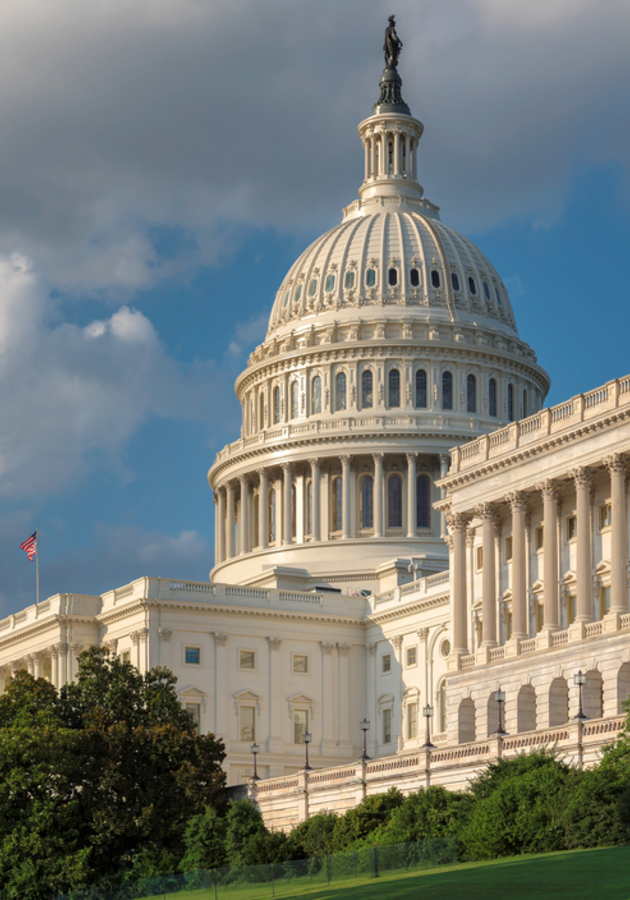
It was a black-tie night. Tuxedos, set tables, two thousand six hundred people in a Washington hotel ballroom. The president of the United States seated on stage next to the First Lady, while a mentalist tried to guess the name of the White House press secretary's unborn baby.
That was the moment... at eight thirty-four in the evening on Saturday, April twenty-fifth, two thousand twenty-six... that an armed man forced his way through the security screening area of the Washington Hilton and opened fire.
Donald Trump was evacuated. No one in the ballroom died. One agent was shot... protected by his vest. The gunman was tackled and arrested on the spot.
This is the twelve-minute Radar... Teacher of the month, assassin the following week. What happened, who the man was, and what to do with this information.
The dinner Trump had never attended
The White House Correspondents' Dinner is an annual event that has existed since nineteen twenty-four. It is an American tradition: the president sits at the table with the press, there is a comedian or performer, speeches, and a formal attempt at a truce between power and those who cover it.
Trump had never attended during his first term. Two thousand twenty-six was the first time he showed up... as a sitting president.
The irony was hard to miss: the man who had done more than anyone to attack the American press chose exactly that night to attend. And exactly that night was interrupted by gunfire.
The event brought together Vice President JD Vance, FBI Director Kash Patel, Health Secretary Robert F. Kennedy Jr., press secretary Karoline Leavitt, and other top government figures. It was, in short, an unusual concentration of American officials in a single location... in a hotel with public entrances and open corridors.
Who the shooter was
Cole Tomas Allen was thirty-one years old and lived in Torrance, California, a suburb of Los Angeles. He was not a recluse. He was not invisible. He was a tutoring teacher at a company called C two Education... where he had been named teacher of the month in December two thousand twenty-four. Before that, he had earned a degree in mechanical engineering from Caltech... one of the most demanding technology institutes in the world... in two thousand seventeen, and completed a master's degree in computer science in two thousand twenty-five.
His students described him as completely normal and friendly. An Asian-American civic organization said he had tutored community youth as recently as April fourteenth... eleven days before the attack.
But running parallel to that visible life, there was another one.
On social media... on a Bluesky account verified by NBC News... Allen posted and reposted criticism of the Trump administration, the American war in Iran, and immigration policies. His sister, interviewed by the Secret Service after the attack, said her brother had a tendency to make radical statements and constantly referenced a plan to do "something" to fix the world.
Hours before entering the hotel... Allen emailed a manifesto to family members. The message... which ran more than one thousand words... opened with a casual "Hello everybody!" before apologizing to his parents, colleagues, and students for having lied that he had a job interview. "I didn't specify it was for the Most Wanted list," he wrote.
The manifesto stated that he intended to attack members of the Trump administration... prioritized by rank, from highest to lowest. It explicitly excluded FBI Director Kash Patel. It said he did not intend to harm security personnel or hotel staff... but added: "I would still go through most everyone here to get to the targets, if it were absolutely necessary."
His brother read the email and contacted police in Connecticut. But too late to stop what came next.
How he got in
Unlike the Butler attack in two thousand twenty-four... Cole Allen did not climb onto any rooftop. He did not disguise himself. He did not exploit a sniper blind spot.
He simply booked a room at the Washington Hilton... the same hotel where the dinner was taking place. He was a guest there.
The hotel is a functioning commercial establishment. That night, while the dinner was happening in the main ballroom, the rest of the hotel remained open to the public. The Secret Service secured only the internal areas of the event... not the external perimeter of the building.
Allen traveled by train from Los Angeles to Chicago and then on to Washington in the days before. He arrived, checked in, and waited.
At eight thirty-four, he ran toward the security screening checkpoint at the entrance to the event... rushing past the metal detectors... armed with a shotgun, a handgun, and multiple knives. He fired at least once before being tackled by agents. The shot struck a Secret Service agent... stopped by his vest. Allen was pinned to the floor, shirtless, and arrested on the spot.
The dinner was canceled. Trump was taken to the White House, where he held a press conference. He said he "fought to stay" but the Secret Service insisted he leave.
A Republican senator has already announced legislation to build a ballroom inside the White House itself... making it unnecessary to use public hotels for presidential events. The president said the Washington Hilton "was not a particularly secure building."
The odds of it working
Unlike Butler... where the shooter had a quiet plan that nearly succeeded through a security failure... Allen's approach was frontal. A direct charge against an armed checkpoint, in a hotel corridor, with no real element of surprise.
The logic of the operation depended on speed and chaos: create enough panic for the targets to be exposed for a few seconds. The manifesto even acknowledged this: he chose to use buckshot instead of slugs to reduce wall penetration... a choice that reveals technical planning, but also limits effective range.
What stopped the advance was the immediate response of agents at the checkpoint. Allen was contained before reaching the ballroom. Trump and the others were already being evacuated.
From a tactical standpoint, the probability of success in an open charge against a Secret Service checkpoint is very low. Allen's own manifesto seemed to know this: "I will probably need emergency care by the time anyone reads this email," he wrote, referring to any potential injuries as "self-inflicted status."
He was not planning to survive. He was planning to get as far as possible.
What to do with this information
This was the third serious act of violence against Trump in less than two years. Before this: Butler, Pennsylvania, in July two thousand twenty-four... and the Mar-a-Lago golf course in September of the same year. Now, Washington D.C., at a black-tie dinner with the top tier of the American government.
The pattern matters to investors for a simple reason: chronic political instability around the leader of the world's largest economy is not background noise... it is a risk variable.
Markets, historically, react to these events in three layers.
The first layer is the immediate reflex. In the hours following an attack, safe-haven assets tend to rise: gold, the dollar, short-term U.S. Treasuries. Crypto assets can also climb, as happened in two thousand twenty-four, driven by demand patterns in moments of political instability.
The second layer is the repricing of expectations. If the event increases the perception that Trump is under constant threat... or that the American political environment is becoming structurally unstable... institutional investors revise the risk premium on American assets. This can pressure the dollar in the medium term and push Treasury yields higher.
The third layer is the succession scenario. This is the risk markets rarely price explicitly... but it is implicit in any serious analysis. If Trump were removed from the picture, JD Vance would take over. The difference between the two in terms of economic policy is relevant, but not radical. Markets would likely absorb it without collapsing... but with significant transition volatility.
Four concrete steps for investors in this context:
First... no decisions made in urgency. Events like this generate headlines that feel definitive and are, most of the time, temporary for markets. The S&P five hundred rallied after Butler. The same pattern is likely here.
Second... review your exposure to safe-haven assets. Anyone with no position in gold, dollars, or short-term U.S. Treasuries is more exposed than necessary in a cycle of high political instability.
Third... watch the spread between short and long-term U.S. Treasuries. If long yields rise while short ones stay flat or fall, the market is signaling that it perceives greater fiscal and inflationary risk on the horizon. That is the most reliable gauge of market sentiment toward American policy.
Fourth... have a plan ready for volatility, not a panic plan. The difference is that the first was built before the event, with a clear head, and the second is built with the headline open on screen.
The American market is resilient. It has absorbed political assassinations, constitutional crises, pandemics, and wars. But resilient does not mean immune. It means it recovers... for those positioned to wait.

Sign up and read for free!
By signing up, you will get a free 7-day Trial to enjoy everything that 12min has to offer.