Critical summary review
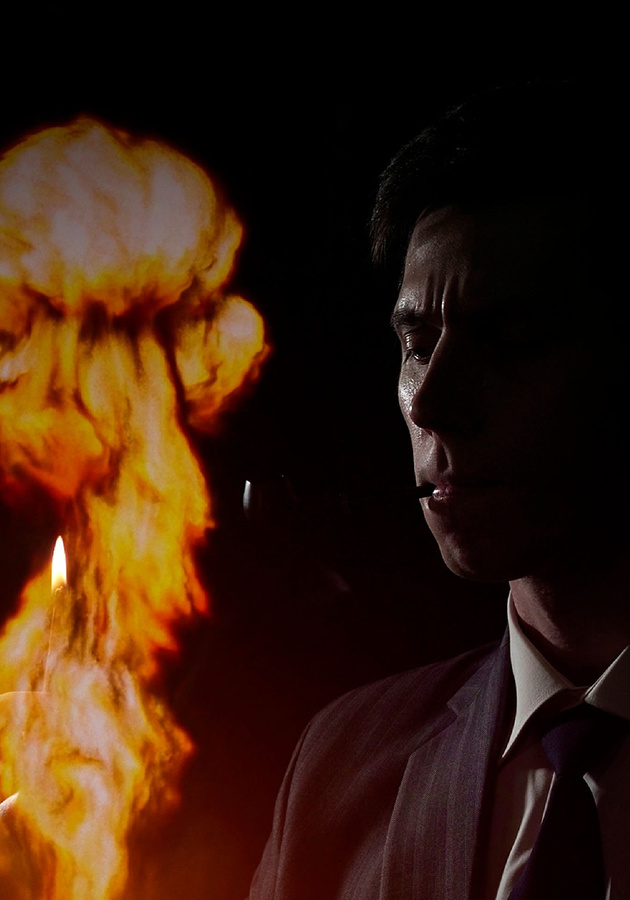
There is a kind of speech every leader gives when they need to change the subject. It is not the victory speech... it is the speech that tries to convince the audience that victory already happened, even though the ground is still shaking. On Wednesday night, April first, two thousand and twenty six, Donald Trump stepped up to the White House podium to do exactly that. A primetime address, broadcast to the entire nation... the military objectives of the United States in Iran have been achieved, and the war should end in two, maybe three weeks.
It is the kind of sentence that calms markets for a few hours. But anyone paying attention knows the math still does not add up.
To understand the weight of this speech, you need to go back thirty two days. On February twenty eighth, the United States and Israel launched Operation Epic Fury against Iran. The strikes killed Supreme Leader Ali Khamenei, destroyed the Revolutionary Guard headquarters in Tehran and hit more than five thousand targets. The Iranian navy was sunk. Nuclear facilities, bombed. Missile bases, reduced to rubble.
Trump listed four objectives from the start... destroy missile capability, eliminate the navy, prevent nuclear development and cut funding to groups like Hamas and Hezbollah. According to the White House, all four have been achieved.
But wars are not measured only by what was destroyed. They are also measured by what was detonated by accident.
Iran, even after being devastated militarily, closed the Strait of Hormuz... the corridor through which twenty percent of all the planet's oil passes. Think of the strait as a faucet. If you shut that faucet, pressure rises in every pipeline in the world.
Brent crude spiked to one hundred and twenty dollars a barrel at its peak. It has pulled back to around one hundred, but remains forty percent above pre war levels. The International Energy Agency called it the largest supply disruption in the history of the global oil market. Larger than the nineteen seventy three crisis. And this time it is not just oil... the strait is also a route for natural gas, fertilizers and helium.
The Gulf states went into logistical collapse. Kuwait and Qatar import more than eighty percent of their food through that corridor. Basic prices surged between forty and one hundred and twenty percent. Iran attacked ships, ports and even desalination plants, which supply ninety nine percent of drinking water in some of those countries. It is like cutting the water to an entire building to hit a single apartment.
On the humanitarian side, the numbers are hard to confirm because the internet inside Iran is virtually shut down. The NGO HRANA estimates more than one thousand seven hundred civilian deaths, including more than two hundred children. The Red Crescent reported nearly two thousand dead as the war reached the one month mark. More than sixty thousand homes damaged, nearly five hundred schools hit. The United Nations speaks of three million displaced. The most serious incident happened on day one... an American missile struck a girls' primary school in Minab due to a coordinate error, killing at least one hundred and forty eight students.
There is a legitimate debate about the reasons for this conflict, and it is worth hearing both sides.
Supporters of the operation point out that Iran was on a dangerous trajectory. The regime massacred more than thirty thousand protesters between late two thousand and twenty five and January two thousand and twenty six. The nuclear program was advancing. The missiles were becoming more sophisticated. Funding to Hezbollah and Hamas never stopped. In the view of those who support the war, waiting longer would have meant accepting that Iran would cross a point of no return.
On the other side, critics say negotiations were not exhausted. Indirect talks were taking place in Oman weeks before the attack. International legal scholars argue the operation violates the United Nations Charter. And the Pentagon itself, in a briefing to Congress, contradicted the White House by stating there was no evidence of an imminent Iranian attack against the United States.
Now, the point that matters to anyone reading from anywhere in the world... what this conflict is doing to the economy.
The Federal Reserve is cornered. Inflation has risen because of expensive oil, but the economy is slowing down. Raising rates chokes growth. Cutting them feeds inflation. It is like pressing the brake and the gas pedal at the same time.
Gasoline in the United States has risen nearly eighty cents per gallon in one month. Diesel, more than a dollar and thirty cents. And everything you buy... food, clothing, electronics... traveled on a truck before it reached you.
The release of four hundred million barrels from global strategic reserves was announced as a response. But that covers only twenty days of normal flow through the strait. The Dallas Fed estimates that if the strait remains closed through the second quarter, global growth could fall by nearly three percentage points. If the barrel reaches one hundred and seventy dollars, Bloomberg projects the impact doubles... stagflation, that scenario where prices rise and the economy shrinks.
And the American public? A Reuters and Ipsos poll from March showed sixty percent disapprove of the strikes. Sixty six percent want the war to end soon, even without achieving all objectives. Trump's approval has dropped to thirty six percent, the lowest of his second term. Even forty percent of Republicans now support a swift end to the conflict.
Tonight's speech is, in large part, a response to that erosion. But there is a practical problem. The Wall Street Journal reported that Trump is willing to end the war even without securing the reopening of the Strait of Hormuz... because forcing that reopening could stretch the conflict beyond the promised timeline.
Meanwhile, Iran keeps firing. Missiles at Israel, drones at Kuwait. Hezbollah has opened a front in Lebanon, where more than one thousand one hundred people have died. Khamenei's son was elected the new Supreme Leader... a sign that the regime does not intend to negotiate on its knees. China and Pakistan have presented a peace initiative. The Iranian president has expressed willingness to end the conflict, but demands compensation and a cessation of hostilities on all fronts. Those are conditions Washington is unlikely to accept.
Trump says it is over. Television broadcasts it. The market breathes for a few hours. But the Strait of Hormuz remains closed, the missiles keep flying and the majority of Americans never bought into this war. The address is not the final period of a conflict. It is the opening paragraph of a new phase, where every additional day without the strait reopening brings the world closer to a shock that no speech can soften.
What to do with this information
Three scenarios, three different postures.
Scenario one... the war ends in two to three weeks. Trump delivers on the timeline, Iran accepts a ceasefire, the strait gradually reopens. Oil prices pull back, but not to pre war levels. Damaged infrastructure in the Gulf could take years to restore. For investors, watch energy sector stocks and commodity funds, which should remain elevated even with de-escalation. Relief at the pump will be gradual, not immediate.
Scenario two... the war cools down, but the strait does not reopen. This is the scenario analysts consider most likely. Bombing subsides, but insurers continue refusing coverage for ships in the region. Oil above one hundred dollars for an entire quarter means persistent inflation, delayed rate cuts and pressure on currencies of importing nations... including those in emerging markets. Pay attention to diesel, which affects the entire logistics chain, and to fertilizers, essential for agriculture. Avoiding debt tied to variable interest rates could make a difference.
Scenario three... the conflict escalates. Iran does not yield, the United States sends ground troops, the barrel surpasses one hundred and seventy dollars. Governments begin rationing fuel. For those with risk exposure, time to reinforce defensive positions... government bonds, dollar, gold. For those running a business, review supply contracts and secure inventories of critical inputs.
In any scenario, the world does not go back to what it was before February twenty eighth. The most practical lesson is that distant geopolitical crises charge their toll at the gas station, the grocery store and the bank statement. Staying informed is not optional. It is protection.

Sign up and read for free!
By signing up, you will get a free 7-day Trial to enjoy everything that 12min has to offer.